

People often ask me why the women in my paintings look the way they do. They rarely shout for attention. They don’t appear fragile, yet they don’t need to prove their strength either. There is something calm about them. Confident. Resilient.
Over the years, I’ve realised that I don’t paint these women because I imagine them. I paint them because I’ve been surrounded by quiet strength for much of my life. My son, Max, was born with a spontaneous mutation in the GNAO1 gene, a rare neurological condition that has profoundly shaped his life and ours. He lives with severe dystonia, is unable to speak or eat independently, requires tube feeding, wears diapers and depends entirely on others for every aspect of daily life. He needs care and supervision twenty-four hours a day. In many ways, he experiences the world like a toddler. Yet he is sixteen years old. And despite everything life has asked of him, he remains one of the happiest people I know. He smiles easily. He laughs often. He greets almost everyone with an enormous hug.
For years, caring for Max became my full-time life alongside trying to build a career as an artist. Like many parents of children with complex disabilities, I wasn’t only a mother. I became a nurse, planner, advocate, therapist and crisis manager.
After a prolonged hospital stay during which Max experienced several episodes of status dystonicus, he eventually received Deep Brain Stimulation. Thankfully, those life-threatening crises have not returned, although the dystonia itself never completely disappeared. When he left the hospital, he moved to Villa Expert Care in Rijswijk because caring for him at home had simply become too much. Raising two children on my own, running a business and providing intensive care every day was no longer sustainable.
Earlier this year, everything changed again. Villa Expert Care announced it would close. For many families, that news turned life upside down. I was deeply shocked that a commercial healthcare organisation could decide to discontinue specialised care, knowing how dependent families had become on it. Although legal proceedings are still ongoing, I eventually had to focus on one thing above all else: Finding the best possible place for Max.
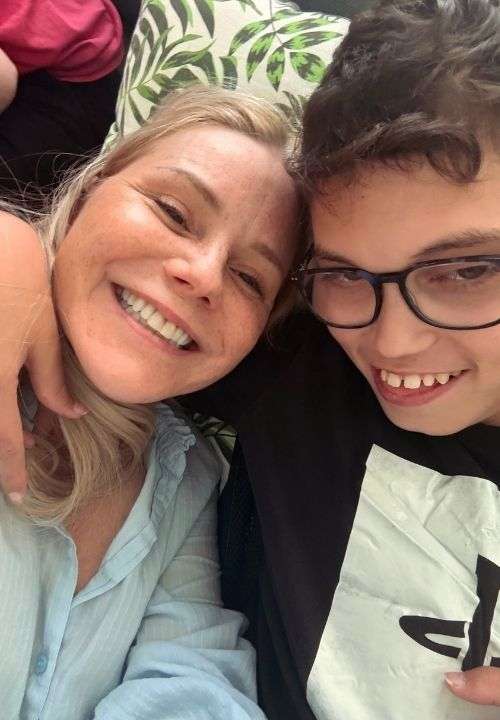
That place turned out to be Kempenhaeghe in Heeze. Visiting him isn’t easy. From my home in Rotterdam, the journey takes around two and a half hours by public transport each way, and because of the limited bus service, every visit requires careful planning. But every kilometre disappears the moment I see him. Today we spent the afternoon together.
We cuddled on the sofa while watching Casper and Emma. He proudly showed me his new environment, and I gave him a little koala that one of my collectors had given me earlier this week. He loved it immediately, so we attached it to the bag that carries his tube feeding. Sometimes happiness really is that simple. Watching him now, I see a different child than I did a year ago. He plays with toy cars. Ambulances are his favorite! He laughs with the carers. He ‘chases’ everyone with water pistols. The clinic clowns visit regularly. There is music therapy. Most importantly, he looks relaxed. Safe. At peace.
When it was time to leave, he wrapped his arms around me, gave me a kiss and one of those enormous hugs that only Max can give. The train journey home gave me plenty of time to think. People often see my life through paintings, beautiful interiors, fashion, museums and travel. Those things are genuinely part of my world. But this is part of my world too. Long train journeys. Hospital appointments. Care facilities. Difficult decisions. Learning to let go. Learning to trust others. And perhaps that’s exactly why the women in my paintings possess a quiet strength. Not because I consciously decide to paint them that way. But because quiet strength is something I’ve come to recognise, admire and hold onto in my own life. It doesn’t need to announce itself. It simply keeps showing up, every single day.
Love,
Wendy



Leave A Comment
You must be logged in to post a comment.