

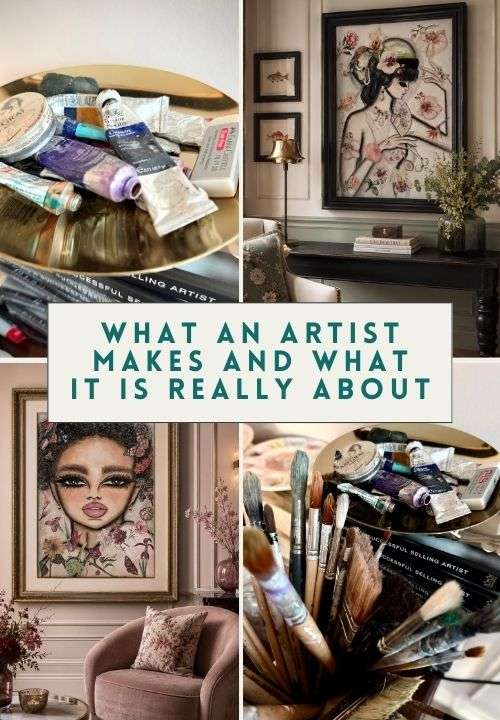
When people encounter a work of art, they almost always begin by describing what they see. A portrait. A landscape. A still life. A woman wearing beautiful jewelry, a silk headscarf or an elegant dress. We instinctively describe the visible subject, yet that is rarely where great art begins. The artists who continue to matter long after their own lifetime are remembered not because of what they painted, but because of what their work was truly about.
Vincent van Gogh did not become one of history’s greatest artists because he painted sunflowers. Pablo Picasso is not remembered simply for distorted faces, nor is Frida Kahlo celebrated because she painted herself repeatedly. Their subjects became vehicles through which they explored much larger ideas: identity, suffering, politics, love, mortality and the human condition. The visible image was only the language they used to communicate something deeper. As artists, I believe we should regularly ask ourselves two important questions. What am I making? And perhaps even more importantly: what is my work actually about?
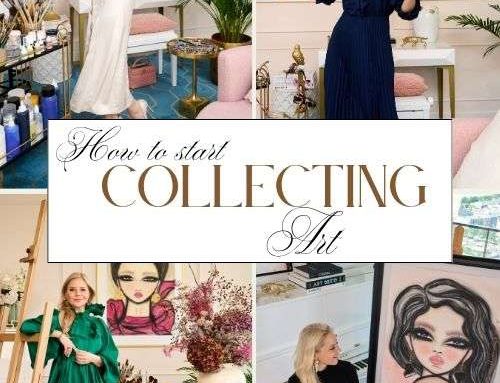
At first glance, my own work appears to celebrate feminine beauty. My portraits often feature women wearing jewelry, luxurious fabrics, headscarves and references to fashion history. Large expressive eyes, full lips and carefully composed details immediately draw the viewer into the image. These visual elements are often what people notice first, but they are not the true subject of my work. They are simply the vocabulary through which I communicate.
What truly interests me is the way women construct identity. My work explores self-determination, agency and the conscious creation of one’s own image. I am fascinated by the tension between vulnerability and strength, between sensuality and restraint, between elegance and authority. These opposites exist simultaneously, and it is precisely this complexity that I try to capture in my portraits. Beauty itself plays a central role in this investigation, but not as decoration. I see beauty as a cultural instrument. Throughout history, beauty has influenced how people are perceived, how power is communicated and how social status is expressed. In today’s world, this has perhaps become even more visible. Social media rewards visual appeal, carefully curated identities and images that immediately capture attention. Whether we like it or not, appearance has become a form of currency.
Rather than criticising this phenomenon, I am interested in understanding it. Why does beauty continue to possess such extraordinary power? Why do we instinctively associate elegance with confidence, sophistication or success? Why are certain images capable of influencing us long before a single word is spoken?
Each portrait I create is, in many ways, a constructed world. I combine references from different periods of history with botanical elements, fashion logo’s, jewelry, ornamentation and symbols that originate from both the past and the present. These compositions suggest that identity is not something fixed or inherited. It is something that is assembled, shaped and continuously redefined. In that sense, my portraits are not representations of individual women as much as they are explorations of how identity itself is composed.
Luxury and fashion provide another fascinating layer within this research. I am intrigued by the symbolic language of luxury brands. Why do certain logos become so desirable? Why do we wear them on our clothing, carry them on our handbags or choose jewelry that immediately communicates a particular aesthetic? These symbols often represent far more than material possessions. They express aspiration, belonging, achievement and personal identity.
The same mechanisms have existed throughout history. Royal portraits, religious icons, family crests and ceremonial dress all communicated status, power and cultural values. Today’s luxury brands have inherited many of those visual functions, albeit in a contemporary form. My work asks whether these symbols have truly changed, or whether they simply represent a modern version of an ancient human desire to communicate who we are.
Ultimately, I am less interested in providing answers than in asking questions. Why do people strive to become unforgettable? Why do we construct ourselves through objects, images and symbols? Why does beauty continue to hold such influence in an increasingly digital and fast-moving world? And is our desire for elegance fundamentally different from that of people fifty, one hundred or even five hundred years ago?
These are the questions that continue to shape my artistic practice. The women I paint are not merely portraits. They are carefully constructed icons through which I investigate identity, beauty, symbolism and the enduring human desire to create meaning through image.
Love,
Wendy


Leave A Comment
You must be logged in to post a comment.