

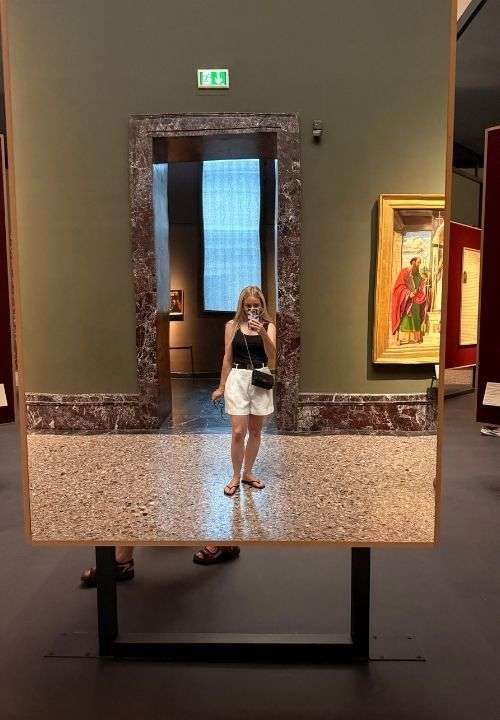
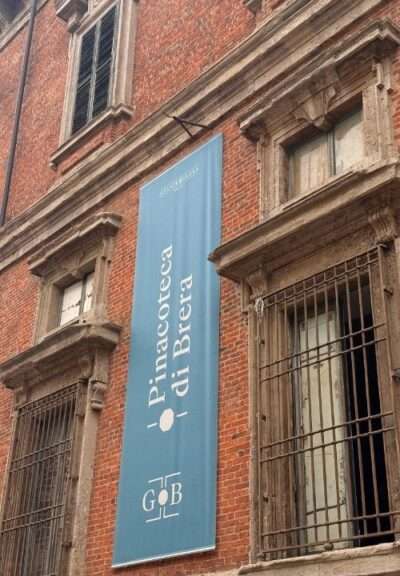
Whenever I visit a new city, I try to spend at least a few hours in one of its museums. Not because I expect every museum to become a favourite, but because art tells you something about the culture, history and values of a place. During my weekend in Milan, that museum was the Pinacoteca di Brera. Housed in the magnificent Palazzo di Brera, the museum is one of Italy’s most important collections of Italian painting. The building itself is worth the visit. Originally founded as a Jesuit college in the sixteenth century, it later evolved into a centre for art, science and education. Today it also houses the Academy of Fine Arts, the Brera Library and, hidden behind the museum, the peaceful Brera Botanical Garden.
A journey through centuries of Italian art
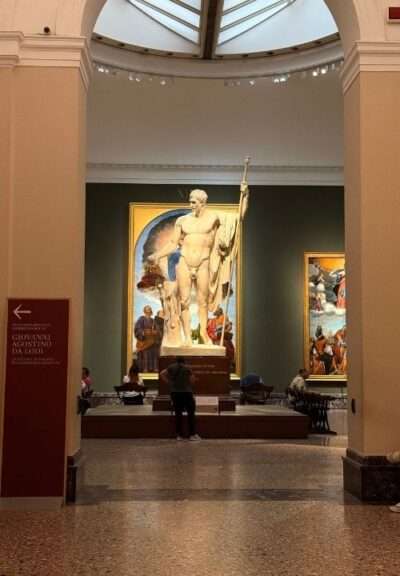
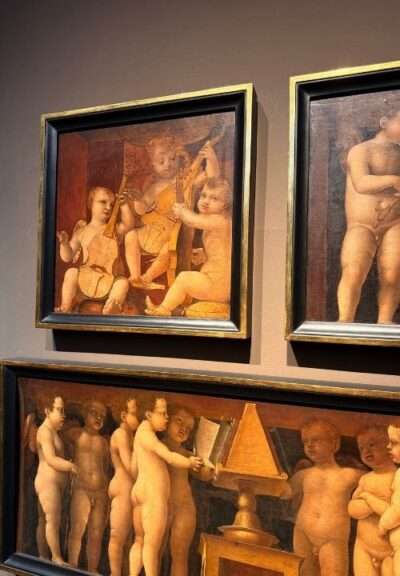
The Pinacoteca is best known for its collection of paintings from the fourteenth to the nineteenth century. As you walk through the galleries, you’ll encounter masterpieces by artists such as Raphael, Caravaggio, Andrea Mantegna, Piero della Francesca and Francesco Hayez. One thing quickly becomes apparent: many of the paintings depict the same subjects. Madonnas holding the Christ Child. The Crucifixion. Saints. The Annunciation. Scenes from the life of Christ. If you’re unfamiliar with Renaissance art, it may even feel as though you’re seeing variations of the same painting over and over again. There’s a good reason for that.
Why are there so many religious paintings?
Before the nineteenth century, the Church was one of the most important patrons of the arts. Churches, monasteries and wealthy religious families commissioned paintings for altars, chapels and places of worship. These works weren’t simply decorative. They were created to teach biblical stories to people who often couldn’t read. Every gesture, colour and object carried symbolic meaning. Gold backgrounds represented heaven, lilies symbolised purity, and halos identified holy figures. Understanding that context makes the paintings much more interesting to look at.
Why do the babies look like tiny adults?
One detail made me smile more than once. Many of the babies, especially the infant Jesus, have remarkably mature faces. At first glance they almost look like miniature adults. This wasn’t because Renaissance artists couldn’t paint babies. It was a conscious artistic choice. The Christ Child was believed to embody divine wisdom from birth. Artists therefore often portrayed him with the facial proportions and expression of an adult to emphasise his spiritual nature rather than his physical age. Once you notice it, you’ll start seeing it everywhere.
How were these paintings made?
Most of the earlier works in the museum were painted using tempera on wooden panels. Tempera is made by mixing pigments with egg yolk, producing bright colours and incredibly fine detail. The paint dries quickly, making it difficult to blend soft transitions. From the fifteenth century onwards, many artists gradually switched to oil paint on canvas. Oil dries much more slowly, allowing artists to create subtle shadows, rich colours and realistic textures. As an artist myself, I always enjoy looking closely at the brushwork. You begin to notice how each painter handled light, skin tones, drapery and composition in a completely different way.
Don’t skip the botanical garden
After several galleries, I was ready for a quieter pace. Hidden behind the museum is the Orto Botanico di Brera, the Brera Botanical Garden. Created in 1774, it originally served as a teaching garden where students studied medicinal and exotic plants. Today it feels like one of Milan’s best-kept secrets. Towering trees provide welcome shade on warm summer days, while winding paths and historic greenhouses make it hard to believe you’re still in the middle of a busy city. After a coffee in the museum café, it was the perfect place to sit, slow down and let everything I’d seen settle in.
Is it worth visiting?
If you’re looking for contemporary art, this probably isn’t the museum I’d recommend first. But if you’re interested in Renaissance painting, Italian art history or simply want to understand how European art developed over several centuries, the Pinacoteca di Brera is absolutely worth adding to your Milan itinerary. And don’t rush. Take your time, enjoy a coffee afterwards and finish your visit with a walk through the botanical garden. Sometimes it’s those quiet moments, rather than the famous masterpieces, that stay with you the longest.






Leave A Comment
You must be logged in to post a comment.