

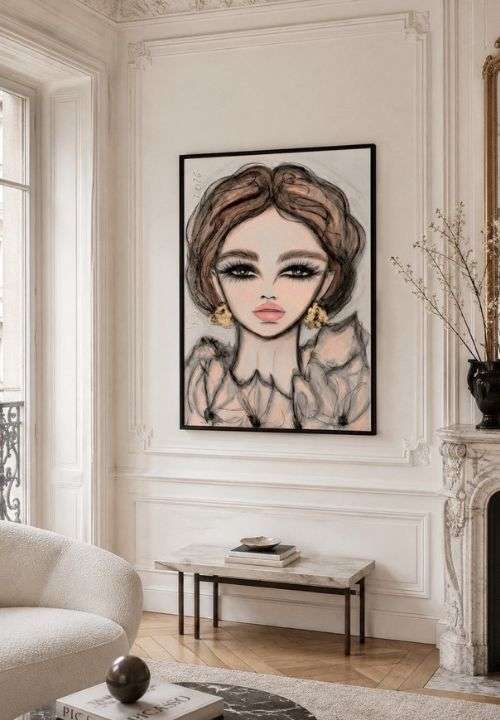
Why are we still fascinated by portraits of women, even in an age of social media and artificial intelligence?
Have you ever wondered why we are still captivated by portraits of women, centuries after they were first painted? From Leonardo da Vinci’s Mona Lisa to the women of Gustav Klimt, from the graceful portraits of John Singer Sargent to contemporary female portraiture today, the female figure continues to fascinate artists, collectors and viewers alike.
Why?
What is it about female portraiture that remains relevant, generation after generation? As a contemporary artist, this is a question I often reflect upon. Much of my work centres around women. Not specific women, but muses. Characters. Archetypes. Women who embody beauty, confidence, elegance, vulnerability or strength. And while styles change, fashions evolve and trends come and go, our fascination with the female portrait seems remarkably constant.
More than a face
A great portrait is never simply a likeness. It tells a story. When we look at a portrait of a woman, we instinctively begin to wonder who she is. What is she thinking? What has she experienced? What kind of life does she lead? A portrait invites curiosity. Unlike landscapes or abstract works, portraiture creates an immediate human connection. We recognize ourselves in another face. We search for emotions, memories and meaning. Perhaps this is why portraits continue to resonate so deeply.
Beauty has always mattered
Throughout history, artists have explored beauty through the female figure. Beauty is often dismissed as superficial in contemporary culture, yet it remains one of the most powerful forces in art. We are naturally drawn to harmony, elegance, colour and form. Beauty captures our attention long before we begin to analyse what we are looking at. This does not make beauty shallow. On the contrary, beauty often serves as a gateway to deeper reflection. Many of the world’s most celebrated artworks combine visual beauty with emotional complexity. They invite us in through aesthetics and keep us engaged through meaning.
The female muse through time
The female muse has appeared in art for thousands of years. She has symbolized love, wisdom, fertility, power, freedom, mystery and transformation. Each era reinterprets her. Today, contemporary female portraiture is less concerned with idealized perfection and more interested in identity, individuality and personal expression. Yet the underlying fascination remains the same. The female portrait continues to act as a mirror, reflecting both the subject and the society in which she exists.
Why collectors love female portraiture
Many art collectors are naturally drawn to female portraiture because it creates an emotional presence within a space. A portrait can transform a room. It introduces personality. Atmosphere. Narrative. In elegant private residences, female portraiture often becomes the focal point of an interior. It creates a sense of sophistication while simultaneously inviting conversation and interpretation. Collectors frequently tell me they feel connected to a particular muse. They recognise a quality in her that resonates with their own experiences, aspirations or memories. That connection is difficult to explain, yet impossible to ignore.
A timeless subject
Perhaps female portraiture remains timeless because it speaks to something fundamentally human. We are endlessly fascinated by one another. By beauty. By emotion. By identity. And by the stories hidden behind a single glance. As a Dutch contemporary artist, I continue to explore these themes through my work. My muses are not intended to provide answers. Instead, they invite questions. Questions that have captivated artists and collectors for centuries.
And perhaps will continue to do so for centuries to come…
Love,
Wendy




Leave A Comment
You must be logged in to post a comment.