

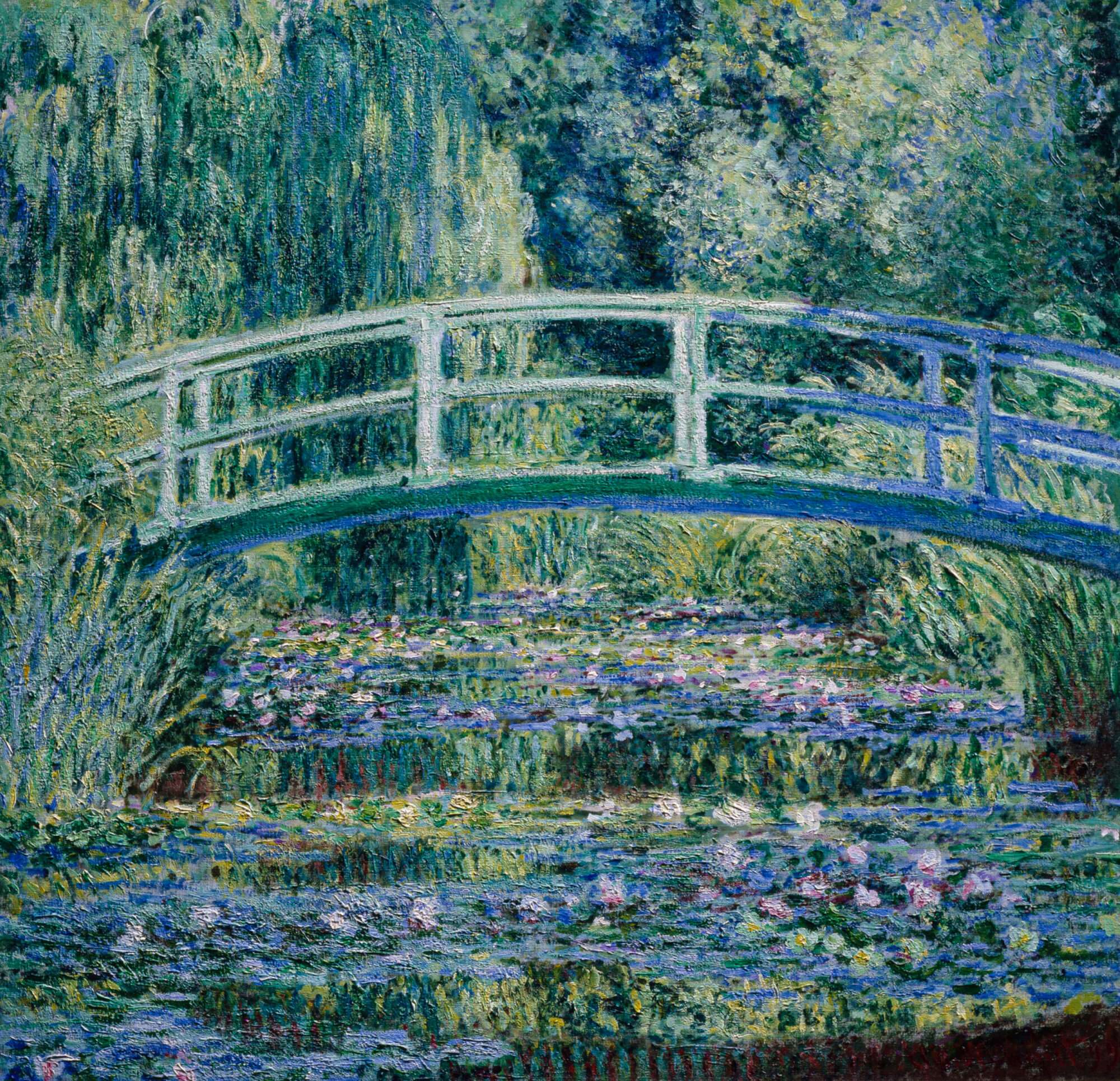
We love to believe that great art simply “happens”, a sublime accident of talent and time. But look closely at Claude Monet, and you’ll find something far more deliberate: a painter who engineered his own market. The water lilies are not a coincidence; they are a strategy.
Monet kept meticulous account books for forty years. Those ledgers show a career built on intentional choices: what to paint, how to present it, when to raise prices, and which partners to trust. He wasn’t just making pictures, he was building a system around his pictures.
Serial vision, not single masterpieces
The water lilies feel inevitable today because Monet made them inevitable. Starting in the 1890s he conceived “series”, Haystacks, Poplars, Rouen Cathedral, Houses of Parliament, Water Lilies, and exhibited them as unified projects rather than isolated works. A series creates narrative, scarcity within abundance, and collector FOMO: if one sells, another in the suite becomes more desirable. This wasn’t only an artistic breakthrough; it was commercial architecture. The Metropolitan Museum of Art
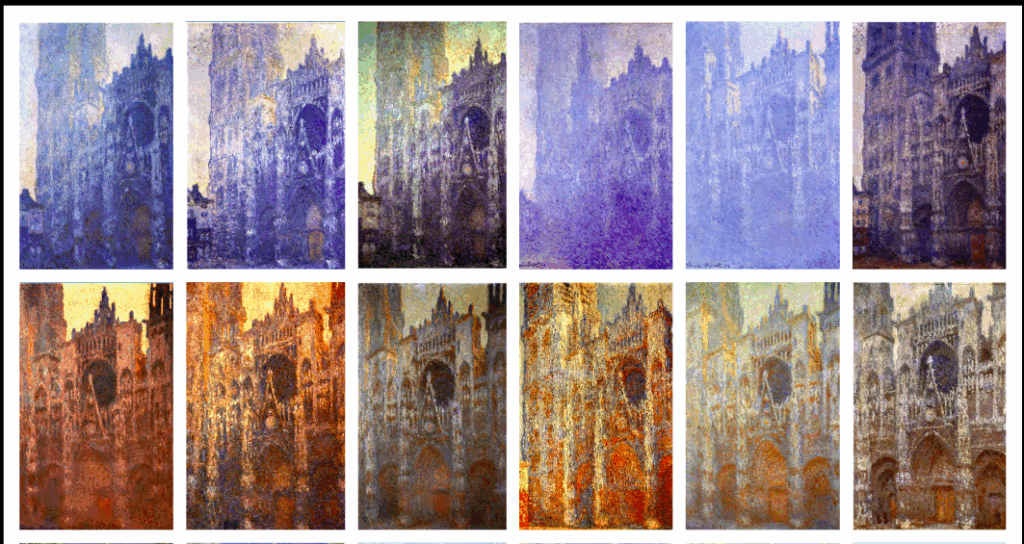
Claude Monet Rouen Cathedral Series
Pricing as a moving staircase
Monet’s income didn’t explode because he painted wildly more; it grew because he priced smarter. Across the decades, average prices per painting climbed dramatically, a staircase, not a spike. When he deemed a body of work exceptionally labor-intensive (think Rouen Cathedral), he set a new tier, famously aiming at 15,000 francs per canvas, and held his ground until the market met him. That is agency.
The power of partners
Monet’s rise is inseparable from his dealers, especially Paul Durand-Ruel, who staged ambitious shows, cultivated international buyers, and built social proof around a still-controversial avant-garde. Monet was selective yet plural: loyal enough to benefit from deep patronage, but pragmatic about diversifying dealers when rivalry lifted prices. In today’s terms: pick distributors who amplify your brand, and keep enough optionality to preserve leverage.
International demand by design
Another “inevitable” myth: that America simply discovered Monet. In reality, his network manufactured that demand, targeted exhibitions, savvy intermediaries, and a product (series) that traveled well and read clearly across cultures. The result: a broader, deeper collector base and price resilience.
My take
As a working artist and brand builder, I see Monet as proof that artistic authorship includes market design. He edited his subjects with intention, orchestrated how viewers encountered the work, controlled release cadence, and used pricing to communicate seriousness. None of that cheapened the art. It protected it.
This matters because we still romanticize the “poor artist” while quietly celebrating those who endure. Rembrandt had soaring years and ruinous ones; the lesson isn’t to worship struggle, but to study the structure behind the successes we still talk about. The artists who survive in cultural memory are often the ones who pair vision with strategy: distribution, positioning, stakeholders, and a financial model that sustains the studio.
What I’m applying today
-
Work in chapters and muses. Each of my collections is built around a female muse, a character that connects my paintings, jewelry, and accessories. Like Monet’s series, these muses create continuity and identity. Earrings, scarves, fashion references: they are not isolated objects, but part of a narrative.
-
Stage the reveal. Whether it’s a large canvas, a silk scarf drop, or a new pair of Crown earrings, I present each launch as a curated experience. Collectors are invited into a storyline — not just a product page.
-
Price in tiers and raise deliberately. From original artworks to Velvet Editions, from limited-edition jewelry to wearable accessories, my work is structured in layers. Each tier reflects labor, complexity, and scarcity. With every milestone, prices recalibrate upward, reinforcing value.
-
Curate partners. Just as Monet relied on dealers, I choose my collaborators with care, from galleries and agents to boutiques that reflect my brand’s ethos. The right partner amplifies reach and reinforces credibility.
-
Think globally. My muses reference fashion houses and cultural icons that resonate internationally. By designing with a global aesthetic, elegant, recognizable, yet deeply personal, I ensure that my work translates across markets and remains relevant to collectors worldwide.
Monet’s real gift to contemporary artists isn’t just a pond of lilies. It’s a blueprint: own your market as thoughtfully as you own your brushwork. That is agency, and, very often, that is the difference between a beautiful career and a sustainable one.
Claude Monet did not just paint water lilies. He designed a market. His account books show a deliberate strategy around artistic agency, pricing, and partners such as Paul Durand Ruel. By working in series like Haystacks, Rouen Cathedral and Water Lilies, Monet built narrative and scarcity, staged exhibitions as cohesive experiences, and raised prices step by step as reputation and demand expanded across France, the United States and beyond. This post examines what his data driven approach means for artists today. We look at series based creation, gallery strategy, international distribution, price architecture and why a clear release plan turns a studio practice into a sustainable business. If you are an artist or collector interested in how art markets are made rather than found, Monet offers a blueprint.
Sources for further reading: Simon Kelly, “How Monet became a millionaire: the importance of the artist’s account books,” Journal of Cultural Economics (2023); National Gallery materials and scholarship on Durand-Ruel and Monet’s series exhibitions. Link to source


Leave A Comment
You must be logged in to post a comment.