


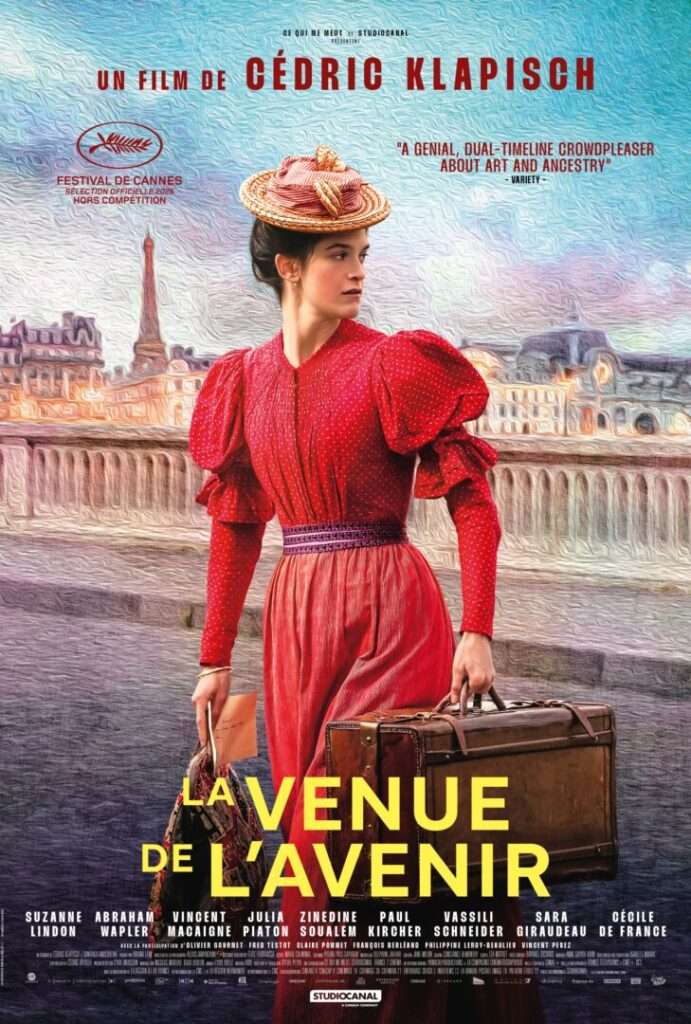
Yesterday I watched a beautiful film, La Venue de l’avenir. What struck me most was its subtle reminder that the future cannot be seen in isolation; it is always tied to the past. The film unfolded around the idea that history does not simply disappear, but instead resurfaces in the present, in new forms, under new guises. One of its most moving threads was the way it referenced the great masters of Impressionism, and how they were once dismissed, even ridiculed, for their work.
In the late nineteenth century, painters like Monet and Renoir were mocked for creating what many critics deemed “unfinished” paintings. Their canvases were not polished in the way traditional art demanded, nor were they striving for perfect realism. In fact, they were accused of failure, failures to depict the world as it truly looked.
At the same time, photography was emerging as a revolutionary technology. Suddenly, reality could be captured with exactitude: every detail, every texture, every face rendered in perfect likeness. Against this backdrop, Impressionist painting was seen as redundant. Why hire a painter to capture your portrait when a camera could deliver it with greater accuracy, and in far less time? Painters were told, explicitly and implicitly, that their days were numbered.
But what happened is telling. Painting did not vanish. Instead, it transformed. Photography freed painters from the burden of strict representation and opened the door to artistic expression, to the translation of feeling, light, and atmosphere rather than mere likeness. The very thing that critics derided, its looseness, its subjectivity, became its strength. The Impressionists gave the world a new way of seeing, one that was profoundly human, emotional, and experiential.
Today, as I reflect on that moment in history, I cannot help but draw a parallel with the rise of AI. We are once again in a cultural moment where people say: “Art is no longer needed. Machines can generate it.” We see algorithms that can produce poems, paintings, and even entire novels in seconds. The fear many feel is the same fear that rippled through the nineteenth century: that human creativity is threatened, overshadowed, or even obsolete.
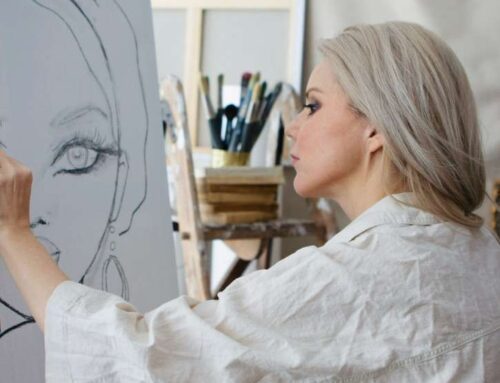
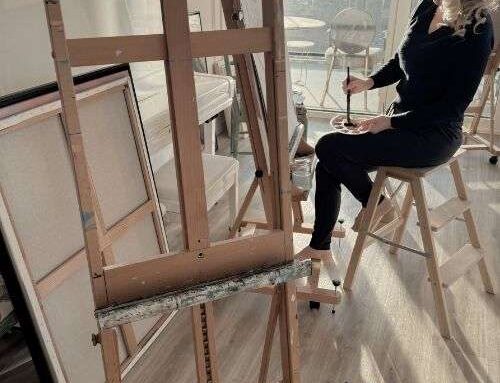
But I believe, as with photography and painting, the opposite is true. Nothing is more human than the act of creating art. AI can replicate patterns, but it cannot replicate intention. It can mimic style, but it cannot embody the lived experience, the emotion, the vulnerability, or the resilience of a human life. A painting is not simply a visual arrangement of colors on canvas; it is the trace of a hand, the presence of a mind, the echo of a heart.
Kandinsky once said that art is the spiritual in form, and that truth remains. AI may simulate form, but it cannot breathe into it the ineffable weight of human existence. That is why, far from diminishing art, this moment makes human creation all the more valuable. In a world where images are infinite, the truly rare thing is the image made by hand, with intent, by a singular person.
I feel grateful to be an artist in this era, standing in the same paradoxical space that the Impressionists once did. Just as they transformed the history of painting under the shadow of photography, I believe artists today will redefine art in the age of AI. And in doing so, they will reaffirm a timeless truth: that to create is not simply to produce, but to be. Art is not about perfection; it is about presence.
And presence, real, human, imperfect, luminous, will never be replaced.


Leave A Comment
You must be logged in to post a comment.