

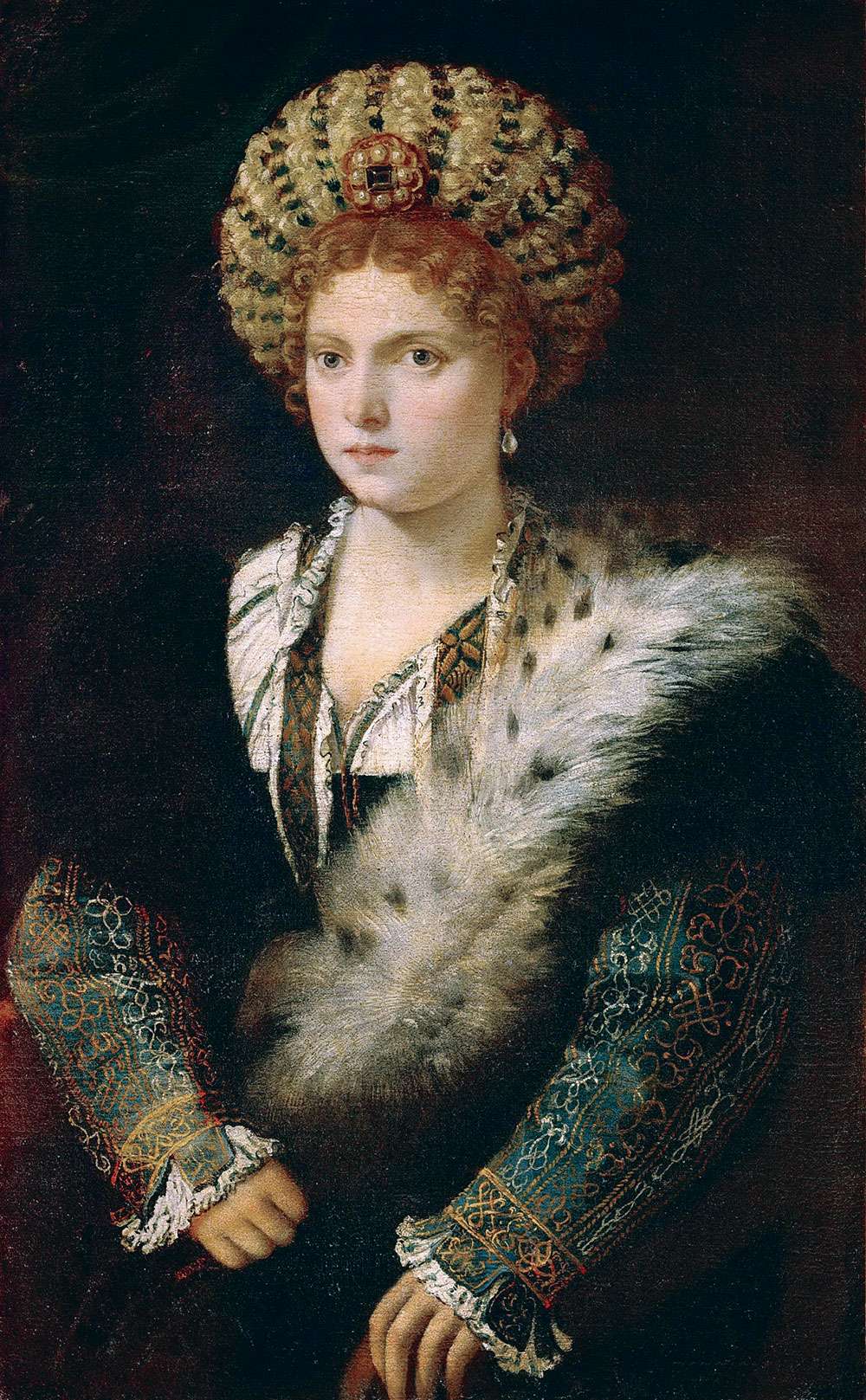
Women Who Shaped the Cultural Horizon
For as long as art has existed, it has never stood alone. Behind every great masterpiece, there has always been a hand that created it, and a vision that made it possible. That vision often belonged to a patron. Throughout history, patronage has been far more than financial support. It has been an act of belief. A statement of power. A quiet, and sometimes not so quiet way to shape culture, politics, and collective memory. What’s often forgotten, however, is how many of these patrons were women.
Power, Vision & Art: A 3,000-Year Tradition
For more than three millennia, women have used art patronage as a way to express themselves, shape their legacy, and influence the world around them. In patriarchal societies where their power was limited, patronage became their language of influence. Take Hatshepsut, the 18th-dynasty pharaoh of Egypt. She built her monumental temple at Deir-El-Bahari, carved into the cliffs of Luxor. Though depicted wearing male regalia, her inscriptions remained feminine, a powerful duality that declared: I am here. I rule. I create. Or Artemisia II of Caria, who built the Mausoleum of Halicarnassus, one of the Seven Wonders of the Ancient World, as both an architectural and emotional legacy. Or Livia, wife of Augustus, who filled her Roman villa with magnificent frescoes, not only as decoration, but as a statement of refinement and authority.
Female Agency in Sacred Spaces
As Christianity spread, women became patrons of sacred architecture, manuscripts, and altarpieces. Religious patronage offered a rare public voice for women. Hildegard of Bingen, the Benedictine abbess, didn’t just write mystical texts, she commissioned and even helped paint illuminated manuscripts that continue to inspire centuries later. In Renaissance Italy and northern Europe, nuns and female patrons commissioned Raphael, Bellini, Correggio and others to paint for their convents. Their influence shaped the iconography and tone of entire artistic movements.
Renaissance Women Who Defined Eras
When we think of patronage in art history, Isabella d’Este stands at the center of the conversation. She commissioned Leonardo da Vinci, Mantegna, Titian and Perugino, and collected antiquities with a determination that made her the “Prima donna del mondo.” Her rooms in the Ducal Palace of Mantua were designed not just for beauty, but for power. Catherine de’ Medici, Queen of France, used art and architecture to secure her dynasty’s image. Elizabeth I of England crafted her public identity through carefully controlled portraiture, images that still shape how she is remembered today.
Centuries later, Madame de Pompadour and Marie Antoinette used their patronage to define French taste. And in the 20th century, women like Peggy Guggenheim, Gertrude Stein and A’Lelia Walker became the visionaries behind modern art movements, supporting artists long before institutions dared to.
These women didn’t just collect art.
They shaped eras.
Patronage Was Never Passive
Museums often frame patronage in tidy donation tiers, but historically it was far more personal and transformative. Patrons weren’t simply “buyers.” They were co-authors of cultural history. They decided which artists thrived, which works were created, which movements rose, and which legacies endured. Without patrons, Michelangelo might not have sculpted, Pollock might not have painted, and entire artistic languages might never have emerged.
This isn’t just about art history.
This is about cultural power.
A Living Tradition
Patronage is not a thing of the past, it is very much alive. And today, supporting a living artist is one of the most meaningful ways to stand in that lineage. Every major era of art was shaped by visionaries who believed before the world caught up. By those who saw potential, and decided to give it space, time, and breath.
As a contemporary artist, I am deeply inspired by these stories, because without patrons, much of what I create would remain an idea. Just like Hatshepsut’s temple, Isabella’s studiolo, or Peggy Guggenheim’s Pollock, each new work I bring into the world stands on the shoulders of those who believe in it.
Step Into the Legacy
If you feel called to step into this tradition, to become part of a living lineage of mecenas, visionaries, and cultural shapers, I invite you to learn more about my Patronage Circle.
It’s not about buying art.
It’s about shaping the world it belongs to.
👉 wendybuiter.com/patronage-circle
“Great art needs great patrons. Without them, masterpieces would remain dreams.”
Wendy Buiter
Sources & Further Reading
-
Sheryl E. Reiss, Female Patrons Throughout History, Frieze Masters (Issue 7, 2018)
https://www.frieze.com/article/female-patrons-throughout-history -
Women of Art: 5 Patrons Who Shaped History, TheCollector
https://www.thecollector.com/women-art-patrons/ -
The Metropolitan Museum of Art — CC0 Images and Collection Database
https://www.metmuseum.org/art/collection -
Wikimedia Commons — Public Domain Artworks
https://commons.wikimedia.org/ -
Library of Congress — Prints and Photographs Online Catalog
https://www.loc.gov/pictures/



Leave A Comment
You must be logged in to post a comment.